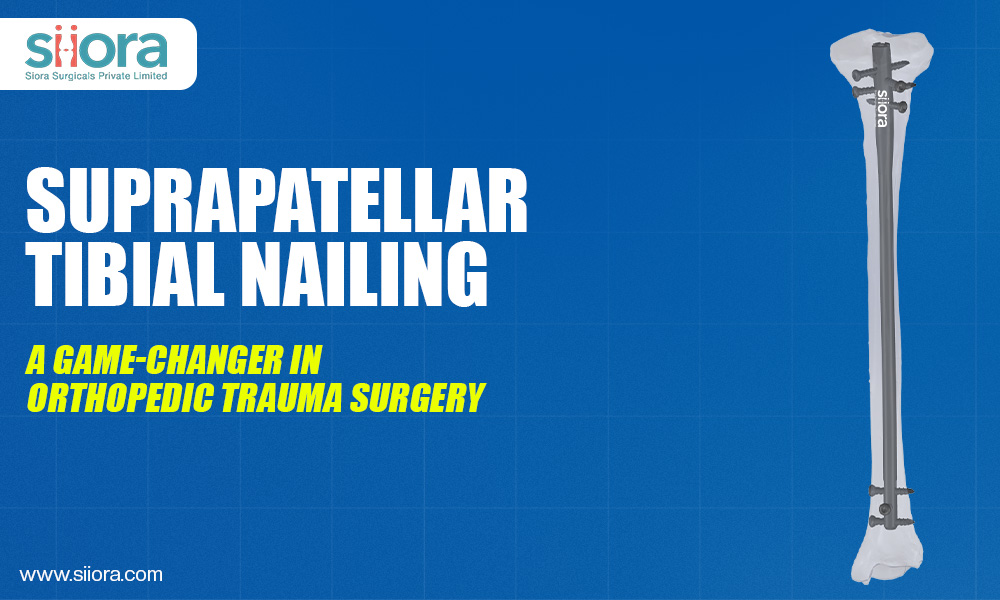
Fixing tibial fractures has never been a simple task. The tibia, being one of the main weight-bearing bones of the body, takes a lot of stress with every step. For decades, the go-to method for stabilizing long tibial shaft fractures was the infrapatellar intramedullary nail. It worked, but it came with issues that surgeons and patients knew all too well. Excessive knee pain after surgery, malalignment in tricky fractures, and the uncomfortable knee-flexed surgical position made the operation harder than it needed to be.
Over time, orthopedic surgeons started asking the obvious question: couldn’t there be a better way to put in a tibial nail? Out of that need came the suprapatellar tibia nail, or above-the-kneecap, approach. Today, it’s no exaggeration to say that this method has reshaped tibial fracture management and feels nothing short of a game-changer.
Old Method, Old Problems
With the traditional infrapatellar approach, the nail is introduced just below the kneecap, and the leg is bent sharply. To an outsider, that might not sound like a big deal, but anyone who has stood at the operating table knows how awkward that position is. Holding the fracture reduced while keeping the knee flexed can feel like balancing on a tightrope. The bone fragments often want to drift out of line, particularly in fractures close to the top of the tibia.
Patients also paid the price. A lot of them reported nagging pain at the front of the knee, sometimes lasting months or even years after surgery. That pain made rehabilitation slower, which mattered because early mobilization is critical for tibial fracture recovery.
What the Suprapatellar Approach Offers?
The suprapatellar technique works differently. Instead of bending the knee to get access, the leg is kept mostly straight. A small incision is made just above the kneecap, and the instruments are passed carefully through a protective sleeve that shields the cartilage and the joint. The nail is then guided down into the tibia from the top, with the fracture kept in nice alignment.
It might sound riskier to work so close to the knee joint, but the specially designed cannulas solve that problem. They act like a guardrail, protecting the joint as the instruments pass through.
Benefits Seen in Practice
Surgeons who have switched to this method notice several key advantages:
- Alignment is easier. Keeping the leg straight means the bone fragments stay in line, especially near the top of the tibia.
- Fluoroscopy is simpler. The extended leg position makes X-rays clearer, reducing both operative time and radiation exposure.
- Less knee pain. Because the patellar tendon isn’t being repeatedly pulled and stressed, patients report fewer complaints of post-surgery pain.
- Smoother surgery. Many surgeons describe the whole procedure as less of a tug-of-war compared to the infrapatellar method.
How Patients Benefit?
From a patient’s perspective, this all translates to smoother recovery. Less knee pain means walking aids can be discarded earlier. Better alignment improves long-term outcomes, especially in young active individuals who want to return to sports or heavy work. For elderly patients, it simply means fewer setbacks on their road back to independence.
Early Concerns and Reassurance
When suprapatellar nailing was first described, some surgeons were skeptical. Would operating through the knee joint damage cartilage and cause arthritis later? With more experience and long-term outcome studies, these fears have largely been put to rest. The protective sleeves work as intended, and no consistent increase in cartilage damage has been demonstrated when the technique is performed correctly.
Why It Truly Changes the Game?
Every now and then, orthopedic trauma surgery sees a shift. Locking plates did it for complex metaphyseal fractures; now suprapatellar tibial nailing seems to be doing the same for shaft and proximal tibia injuries. It doesn’t just make things technically easier—it addresses the very problems that frustrated both surgeons and patients in the past.
Final Thoughts
Tibial shaft fractures remain serious injuries, but the way they are treated has improved dramatically. Suprapatellar tibial nailing is not a passing trend; it has proven itself in operating theaters across the world. By offering better alignment, less knee pain, and faster recovery, it has raised the bar in orthopedic trauma care. For the surgeon, it makes the operation more predictable; for the patient, it means walking sooner and healing better. That’s what makes it a genuine game-changer.
Siora Surgicals Pvt. Ltd. is a renowned manufacturer and supplier of CE-certified orthopedic implants. The company has been operating for over 3 decades and has a huge global distributor base. Currently, Siora is looking to be counted among the top orthopedic device manufacturers in USA by supplying quality trauma implants in the country.
 siiora surgicals pvt. ltd