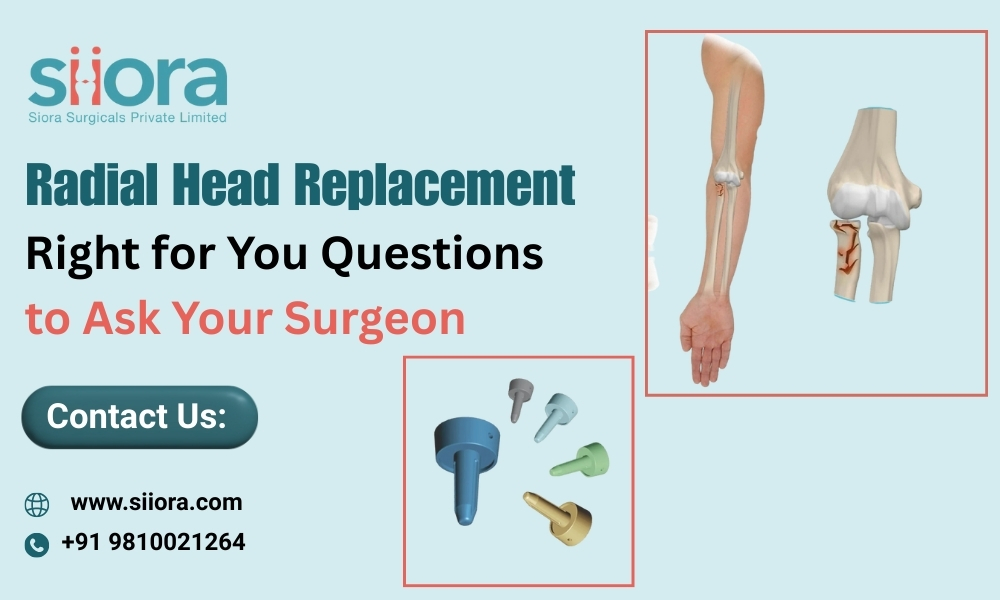
If you’ve injured your elbow, especially from a fall or accident, and your doctor mentions a radial head replacement, it can feel like a lot to take in. You’re not alone in wondering what that means or if it’s the best path forward. Before agreeing to surgery, it’s important to slow down and ask the right questions. Here’s what you need to know and what to ask before deciding if radial head prosthesis is right for you.
First, What Is Radial Head Replacement?
The radial head is a small, round part of your elbow joint that helps with movement and stability. When it’s badly fractured, especially in a way that can’t be pinned or screwed back together, your surgeon may recommend replacing it with an implant. This is typically done using metal components designed to mimic the natural shape and function of your bone.
This procedure is more common in complex elbow injuries, especially those involving dislocations or ligament damage. It can help restore motion, prevent long-term arthritis, and avoid chronic pain.
Are You a Good Candidate?
Not everyone with a broken elbow needs this surgery. So, one of the questions to ask your surgeon is:
“Why do I need a replacement instead of a repair?”
Ask for a clear explanation of the damage and whether there are other treatment options like physical therapy, splinting, or internal fixation that might be viable. If the fracture is severely shattered (what doctors call “comminuted”), a replacement may be the only option for maintaining normal elbow use.
What Are the Risks and Benefits?
Every surgery carries risk. That’s why it’s important to ask:
“What are the risks, and how often do complications happen?”
Complications like stiffness, infection, nerve injury, or implant loosening can occur. But the good news is, in the hands of an experienced surgeon, these risks are relatively low.
On the other side, ask:
“What are the benefits I can realistically expect?”
A successful radial head replacement often leads to restored motion, strength, and stability. But everyone’s outcome varies based on age, activity level, and the extent of the original injury.
How Experienced Is Your Surgeon?
This one matters more than most people realize. Ask directly:
“How many of these surgeries have you done?”
Experience matters with joint replacements. A surgeon who regularly performs radial head replacements is more likely to anticipate challenges during surgery and guide a smoother recovery.
You can also ask:
“What’s your success rate with this procedure?”
“Do you use a particular type of implant, and why?”
These questions help you understand not just their track record, but their reasoning, and whether they tailor the surgery to the patient or use a one-size-fits-all approach.
What’s the Recovery Like?
Post-op care is just as important as the surgery itself. Ask:
“How long will recovery take?”
“What will I be able to do in the first few weeks?”
“Will I need physical therapy, and for how long?”
Recovery often involves early motion exercises and a few months of rehab. Most people regain solid function, but it’s important to set expectations. You may not get 100% of your previous range of motion back, especially if your injury was severe, but you should be able to return to normal daily activities and even sports, depending on your case.
Final Thought
Choosing to have a radial head replacement isn’t just about fixing a bone; it’s about getting your life and movement back. The best way to make a smart, confident decision is by asking clear, informed questions. Don’t rush it. Bring a list to your appointment, take notes, and if you’re unsure, consider a second opinion. It’s your elbow, your function, and your future. So, take the time to get it right.
Get a world-class range of trauma implants and instruments, including radial head implants, from Siora Surgicals Pvt. Ltd., one of the top orthopedic medical device companies in India.
 siiora surgicals pvt. ltd